
Just another Tax to reach the theoretical CO2 Balance!
It seems to be naive applying neo-liberal principles to the climate change discussion. The financial players are not interested in climate change, but solely in profit. For them it is not a matter of finding the best solution to the problem rather maximising their profits. In political science terms Emissions Trading is a "legalised structure" giving individuals and entities the right (by means of authorisation) to contaminate the atmosphere . The gradual renouncement of that right (permit) results in gaining ownership with monetary value. This form of legalised wealth creation (indulgence) is contrary to the classical political theory, postulating that acquisition of property can only be achieved by means of work. In so far emissions trading is just about earning a huge amount of money ultimately to be paid for by the consumer.
Let us have a look at an Australian farmer who had decided to replace a large number of trees that were felled 100 years ago. He did it to prevent erosion, reduce the salinity of the soil and to provide shady grazing areas for his sheep. A CO2 "indulgence dealer" came along and told him that from a CO2 balance sheet point of view his trees were worth 40 Australian dollars per hectare, and gave him a certificate for his positive CO2 balance. The dealer took a 40% commission. He then sold the CO2 certificate (again cashing in on a commission) to a coal power plant. These dealings did not reduce the CO2 emissions by one molecule, but the sale and purchase of the "indulgence letter" contributed to the increase of the gross national product (GNP). Then, of course, the increased price of electricity will be passed on to the consumer and the cycle is perfect. Only winners, just one loser, but he is the weakest link in the chain, namely the end users. In such a way, huge monocultures of alien plants were planted in Australia, disturbing the biological balance and causing more environmental damage than being useful. Of course, the planting and the maintenance of the plants, like the use of fertilisers, also caused CO2 emissions, because the farmers who planted the trees did not use a donkey, but heavy machinery. In conclusion it is clear the CO2 budget has not been balanced at all but the theoretical CO2 balance was preserved.
An increasing number of climate experts oppose the use of emissions trading. In February 2009 testimony before Congress, leading US climate scientist James Hansen told Congress that Cap and Trade is "a give-away to special interests, who feel, based on extensive empirical evidence, that they will be able to manipulate the program through their lobbyists. Except for its stealth approach to taxing the public, and its attraction to special interests, Cap and Trade seems to have little merit."
In 2005, the European Union initiated a cap and trade system to curb carbon emissions, but four years in, emissions have gone up, not down! Why? The Europeans awarded big polluters with more free pollution permits than their actual level of carbon emissions, which not only gave them no incentive to reduce emissions, it also caused the price of the permits to collapse. And even after the cap was adjusted, the system was so awash in cheap offset permits from the third world that no emissions reductions in Europe were actually required. Meanwhile, power companies who had chosen to do the cheapest thing to meet their targets buying offset permits passed on costs to their customers as if they were doing the most expensive. Now that's a scam.
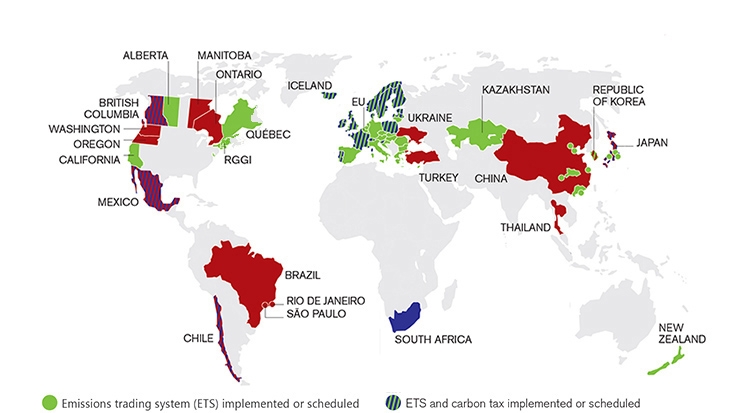
"Carbon (Dioxide) trading is now the fastest growing commodities market on earth.....And here’s the great thing about it. Unlike traditional commodities markets, which will eventually involve delivery to someone in physical form, the carbon (dioxide) market is based on lack of delivery of an invisible substance to no-one. Since the market revolves around creating carbon (dioxide) credits, or finding carbon (dioxide) reduction projects whose benefits can then be sold to those with a surplus of emissions, it is entirely intangible." (Telegraph)
The carbon trading scandal emerged in 2009 when British authorities notified Deutsche Bank about suspicious deals, known as "carousel fraud", designed to generate tax refunds when no tax had been paid. The cases involved buyers importing contracts for CO2 emissions rights into one EU member state from another, free of VAT. The buyers then did not sell them for use in that market but sold them on to an untraceable series of companies in an agreed chain, which ultimately re-exported them, pocketing a rebate from tax authorities, sources familiar with the matter have said.